Engage wins two Agency of the Year titles at the UK Agency Awards
6th October 2026

17th June 2025
Roughly a 14 minute read by
Unless you’re one of the rare few who’ve never delved into a social media platform or app, you’ll know just how many brand messages the average human sees on a daily basis. Spoiler: it’s a lot.
What’s more, social media moves fast, and in 2026, it’s no longer just where people scroll for entertainment. It’s where they discover, explore, compare, and increasingly, start their search for products and services.
That shift makes it even more important to build a clear social media content strategy and publish fresh, on-brand content consistently. Content that doesn’t just grab attention, but shows up in the moments your audience is actively looking for inspiration, answers, or something new.
Now more than ever, social media content should also be tailored specifically for different platforms, each with their own rules, formats, and audience expectations.
So, how do you bring all this together, from content production to channel-specific content, into one seamless social media strategy? Let’s take a closer look.
High-performing content isn’t just the post that gets the most likes. It’s content that has a clear job to do, feels right for the platform, and gives your audience a reason to stop, watch, read, click, or come back for more. In 2026, a strong social media content strategy means balancing creativity with consistency, speed with quality, and brand personality with what people actually want from each channel.
So, what should strong social media content actually do?
If your content is ticking some of these boxes but still not landing, that’s where the right strategy makes all the difference. Our social media team can help you turn good ideas into platform-ready content that feels on-brand, performs with purpose and supports what your brand is actually trying to achieve.
Technology has made creative content production more accessible than ever. From iPhone cameras that rival professional video equipment, to mobile-first editing tools like CapCut and high-spec software like Adobe Premiere Pro and After Effects, creating standout content has never been more accessible.
This shift means that brands like yours can now do more with less, covering a wide range of creative needs with smaller, more agile teams.
But tech is only part of the puzzle. A strong social media content strategy still relies on a thorough understanding of your digital brand guidelines - which set out how your brand looks, how it sounds, and how it shows up across different platforms.
It also takes a consistent approach and proactive thinking, staying close to trends, and understanding what your audience is most likely to engage with.
At Engage, we know that great content doesn’t happen by chance. It takes the right tools, the right team, and the right strategy behind it.
That’s why our full service, in-house creative team is built for speed, collaboration and consistency - to help you move fast, stay on-brand and deliver content that connects across every platform.
Even with all the logistics in place, social media content is never a one-size-fits-all solution. A channel-specific strategy is super important to ensure that the content you create delivers the impact it needs to justify the time and budget invested in it.
Here’s a breakdown of what TikTok, Instagram and LinkedIn all demand and expect from brand posts.
TikTok users crave realness, quick reactions, and relevant cultural moments. It’s about short-form, spontaneous video content that feels natural rather than forced. With this in mind:
Meta platforms are all about polished visuals, clear storytelling, and building meaningful connections. Audiences here expect content that feels intentional, adds value, and reflects a consistent brand presence. Here’s how to make that happen:
LinkedIn audiences expect insightful content from brands. Posts should establish thought leadership and credibility and deliver clear value without being overly formal or corporate.
Sales and marketing platform Mediafly states that interactive content can get 52% more engagement than standalone statics, and interactive video can secure 28% more engagement than regular vids. This is one to keep in mind for all platforms, including LinkedIn.
We’re still pleasantly surprised at how much interaction this LinkedIn post from a Derbyshire steel company generated by taking a classic ‘how many sweets in the jar’ campaign to the platform in the run-up to Easter.
The best content teams are versatile. Whether you’re capturing quick moments on your phone or organising polished photo shoots, your internal team needs the flex to fit the brief. Here’s how different production styles can help your content work harder:
Creating quick, authentic videos using just an iPhone can deliver impactful content without all the complex logistics. iPhone excels at shooting genuine clips in the moment.
They’re perfect for capturing real-time trends and engaging viewers on platforms like TikTok and Instagram Reels, where users appreciate immediacy and relatability.
Both shoots and post-production can be managed from the device itself. It’s also generally faster than using traditional video software, if not quite as sophisticated.
Professional-grade photography elevates your brand storytelling. High-quality, visually striking images are ideal for polished Meta advertising campaigns or pivotal brand-building moments. They help reinforce brand credibility, capture attention, and create a lasting emotional impact.
This format is well-suited to interviews and content that focuses on people and for capturing a range of scenes and settings, both in studio and on location.
Blending polished production with behind-the-scenes authenticity creates highly engaging content. Audiences value transparency, and showcasing the real people and processes behind your brand builds trust and deeper connections.
This hybrid approach to content maintains professional standards while offering genuine, relatable glimpses into your brand.
Consistency in your creative content production across platforms is key to a cohesive brand experience. While formats and presentation styles may vary, maintaining consistent messaging and visual standards ensures your audience recognises and trusts your brand across every touchpoint.
This is where your digital brand guidelines can really come into their own to make your content fly, and all while maintaining brand integrity.
Great content isn’t only about what you say, it’s how you deliver it. From video length to post type and platform preferences, format plays a major role in how your content performs. And with social media now central to how people search and discover, your creative choices can determine whether your brand shows up at the right moment or gets missed entirely.
Here’s how to make smart choices that drive engagement and impact.
Short-form video exploded into popularity with TikTok, but has quickly become a core format across Instagram Reels, YouTube Shorts, Facebook and LinkedIn. Since TikTok's launch in 2018, most platforms have expanded what video can do, giving brands more room to experiment with everything from quick reactive clips to longer storytelling, product explainers and behind-the-scenes content.
But longer limits don’t always mean longer is better. In 2026, shorter videos still play a major role in driving engagement, especially when the aim is to land a message quickly, hold attention and prompt action. Long-form video can work well when there’s genuine depth to the story, but for ads, Reels, TikToks and Shorts, the priority is still simple: hook people early, keep the content focused, and make the next step clear.
Photo or video? Multiple posts or just one? Short form or long? Here’s a snapshot of the latest thinking in social media content strategy.
According to Sprout Social’s 2026 Social Media Content Strategy Report, short-form video remains one of the strongest formats across major platforms. On Instagram, 52% of users say they are most likely to interact with short-form video from brands, while on Facebook, short-form video also comes out on top at 48%.
But the answer isn’t to create video for the sake of it. The same report found that four in five social media users expect to interact with brand content more or the same amount in 2026, so the opportunity is there. The challenge is choosing formats that fit what your audience wants from each platform, whether that’s a quick product demo, a reactive Reel, a useful carousel, or a thought-led LinkedIn post.
Every format has a role to play. But to land impact, it has to match your message and audience. Here’s how to think about it:
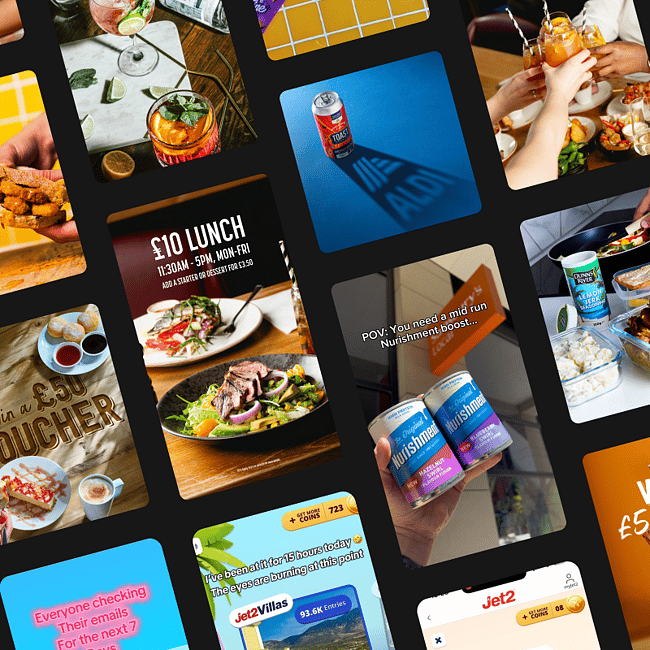
Now we’ve shared the theory, here’s a few examples of how our social media content works in practice:

Our festive content for Whitbread’s pub brands focused on warmth and authenticity.
We invited family influencers into real restaurants, filming genuine moments with the support of a professional camera and lighting set-up. The aim was to capture real emotion through relatable scenes that audiences could connect with.
This authentic, lifestyle-driven approach, designed for Facebook and Instagram, drove over 2.8 million views and led to a significant uplift in bookings.
Frubes can be eaten frozen? Who knew? Well… a whole lot more people do now, thanks to one of our recent social campaigns.
Created to spotlight a little-known product perk and grab the attention of Gen Z and their parents, the campaign used short-form video, shot on iPhone and brought to life with bespoke in-house animations. Reactive, playful and full of personality - it hit the sweet spot.
The result? A 213%+ increase in followers and a step-change in brand engagement.
Great content is always strategic first, but that can be easier said than done. Here are the key steps we take at Engage to build a social media content strategy
Even with today’s easy-to-use, affordable technology, creating impactful social media content still requires thoughtful planning and execution. That means considering everything from what you’re saying to how your audience interacts with your messaging.
Simply posting shiny video content isn’t enough to reach your social media objectives. Success relies on actively managing your social presence, including timely engagement with followers, consistent posting, and actively building an engaged community.
Maximising your social content strategy involves carefully balancing these different elements while respecting each platform’s unique characteristics. Reviewing the key points outlined above will help you evaluate your current approach, identify opportunities for improvement, and ensure your content consistently delivers results.
Once your content is live, measuring performance helps turn good social media content into a stronger strategy. It shows what your audience cares about, which formats are working, and where your content could do more.
The right metrics depend on the goal. For awareness, look at reach, impressions and video views. For engagement, track likes, comments, shares, saves and watch time. For action, focus on clicks, enquiries, conversions and how social content supports the wider customer journey.
Useful metrics to track include:
If you’re not sure which numbers matter most, our social media team can help connect your content performance to the bigger picture, from brand awareness and engagement to traffic, leads and commercial results.
We’re Engage, the digital agency for brands that demand attention.
With a full-service, in-house team of social media strategists, content creators, designers, videographers and more, we’ll help you build a social presence that’s consistent, on-brand and delivers real results.
Ready to make your content count? Let’s talk.
To grow social media in 2026, focus on content that gives your audience a reason to engage and come back. That means posting consistently, using platform-specific formats, testing new ideas, measuring performance, and creating content that is useful, entertaining or memorable.
Good social media content is clear, relevant and easy to engage with. It should match your brand, fit the platform, and offer something of value to your audience, whether that is information, entertainment, inspiration or a useful next step.
There is no single posting frequency that works for every brand. A strong content schedule should be based on your goals, audience, platforms and available resources. It is better to post fewer high-quality, platform-native assets than to publish content that has no clear purpose.
Short-form video remains one of the strongest formats across many platforms, but it is not the only option. Carousels, static posts, Stories, LinkedIn posts, long-form video and user-generated content can all perform well when they match the message, audience and channel.
Start by matching your metrics to your goal. For awareness, track reach, impressions and views. For engagement, look at likes, comments, shares, saves and watch time. For action, measure clicks, enquiries, conversions and how social content supports the wider customer journey.
Social media content may underperform if it lacks a clear purpose, feels too generic for the platform, misses the audience’s needs, or is not being measured properly. Performance can also drop when content is too polished for one channel, too informal for another, or posted without a clear strategy behind it. If your content is getting posted but not getting results, our social media team can help you understand what is and isn’t working, then build a clearer strategy around the formats, platforms and messages your audience responds to.
6th October 2026
14th September 2026

9th September 2026
9th September 2026