Why are Meta ads becoming more reliant on creative?
Meta’s AI systems increasingly use creative as a signal for relevance, intent and likely performance.

28th May 2026
Roughly a 7 minute read by
For most of the last decade, paid media performance has been driven by targeting.
The industry became obsessed with audience segmentation. Interest stacks. Lookalikes. Exclusions. Ever more granular campaign structures designed to squeeze incremental efficiency from the platforms.
The assumption underpinning all of it was relatively simple: if advertisers could define the right audience precisely enough, performance would follow.
But the rise of AI-led advertising systems is beginning to challenge that logic.
Platforms are increasingly making decisions that once sat firmly with media buyers. They are deciding who to reach, when to reach them, which ad to prioritise and how budget should be distributed - often with far less manual input than ever before.
That does not mean strategy is disappearing. Far from it. But it does mean the source of competitive advantage in paid media is changing.
One of the clearest signals of that shift is Meta Andromeda.
Meta describes Andromeda as its next-generation AI retrieval system for personalised ads.
In simple terms, it helps Meta determine which ads are worth considering for each individual user before the platform’s ranking systems decide what is ultimately shown.
Historically, advertisers supplied the targeting logic. The platform’s role was largely to execute against those instructions.
Increasingly, however, Meta is becoming capable of determining relevance itself.
As paid social teams are already finding, the platform is now analysing signals inside the creative itself to determine which audiences are most likely to engage.
That includes:
In practice, that means Meta is no longer simply looking at manually selected audience inputs. It’s scanning the creative and using those signals to identify who is most likely to respond.
For example, a fashion retailer promoting a new spring collection could test a polished campaign video, a creator-led try-on, a product carousel and a value-led offer ad.
The products may be the same, but each execution creates different signals for the platform to learn from. One might appeal to people browsing for inspiration. Another might work harder for users closer to purchase. Another might surface demand around price, fit, trend or occasion.
The creative itself increasingly becomes part of the targeting system.
For years, paid media strategies were built around audience definition. Advertisers identified an audience first, then served them creative. The emerging model looks very different.
Brands now provide platforms with multiple creative routes, while the platform dynamically determines which message is most relevant to which user.
That distinction is important. Because if platforms are becoming increasingly effective at identifying the right audience automatically, then audience selection becomes less of a differentiator.
Creative, however, becomes significantly more important. Not just from a branding perspective, but from a performance perspective too.
Meta has already been moving advertisers towards broader targeting through products like Advantage+, encouraging brands to trust the platform’s machine learning systems rather than relying on heavily restricted audience definitions.
Andromeda accelerates that shift further. Instead of advertisers manually deciding:
“This audience should see this ad” the model increasingly becomes: “Here are several strategically different creative approaches - now find the right audience for each one.”
That changes the role of paid media teams significantly.
For years, high-performing teams differentiated themselves through technical execution:
But as automation becomes more sophisticated, many of those tactical advantages become easier to replicate. What becomes harder to replicate is strategic creativity.
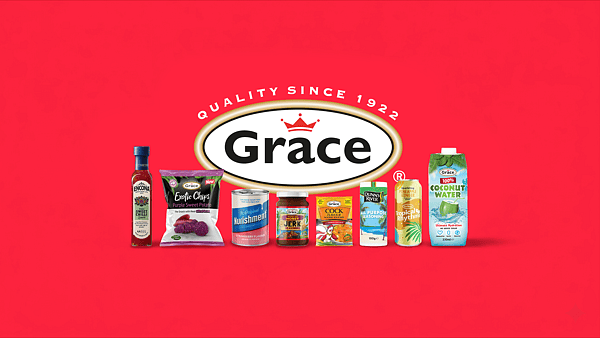
Grace Foods entered 2025 with a big ambition: to deliver stronger social performance and maximise the impact of its media investment.
Rather than relying on heavily polished campaign creative, our strategy leaned into platform-native formats designed to create more meaningful engagement signals - from creator-led recipe content and reactive edits through to influencer partnerships tailored to different audiences and behaviours.
The result was a more effective social mix, with creator-style content consistently outperforming more traditional assets and, in some cases, delivering double the engagement for the same media spend.
The results were significant: more than 50m impressions, 28m reach and 11.5m engagements, despite a leaner media spend. Across the year, the work exceeded every key target, from engagement and cost-per-engagement to follower growth.
More importantly, the approach reinforced a wider shift happening across paid media: creative differentiation is increasingly what helps platforms understand who content is relevant to and where performance is most likely to come from.
One of the biggest misunderstandings around AI-led advertising is the assumption that brands simply need to produce more content to feed the algorithm.
Volume alone is not the answer. The opportunity lies in producing more meaningful variation.
The strongest advertisers are creating strategically distinct creative designed to test different hypotheses around audience motivation and intent.
That might mean:
Importantly, these differences need to be substantial enough for Meta to treat them as genuinely distinct creative routes.
Changing a headline or tweaking a CTA colour is unlikely to create meaningful differentiation.
Advertisers testing Andromeda are already seeing the importance of this. Meta effectively categorises creative through internal identifiers that determine whether the platform views an asset as genuinely new or simply a variation of an existing ad. The goal is diversified creative thinking.
For example, a fashion retailer promoting the same seasonal collection could test:
The products may be the same, but each execution creates different signals that help Meta identify different audience behaviours and intent states.
The offer itself remains the same. But each execution creates different signals that help Meta identify different audience behaviours and intent states.
The more effective paid media teams are increasingly operating less like traditional media buyers and more like learning systems. They are using platforms to gather insight at scale, then feeding those learnings back into creative strategy and campaign development continuously.
There is a temptation to view automation as a threat to paid media expertise. In reality, automation is changing where expertise creates value.
AI systems are becoming increasingly effective at handling the mechanics of optimisation and delivery. But they still rely on human input to shape the quality of the signals entering the system.
Platforms can optimise distribution. They cannot independently determine:
That remains human work.
The danger for brands is assuming automation means autopilot. The opportunity is recognising that AI allows marketers to spend less time managing mechanics and more time focusing on higher-value thinking:
As automation commoditises execution, strategic thinking becomes more valuable.
The brands that benefit most from this shift will not necessarily be the ones with the biggest budgets or the most advanced automation stack.
They will be the brands that:
Critically, this does not mean handing full control to the platforms without scrutiny.
Advertisers still need:
In short, the role of advertisers is not disappearing, it’s evolving.
The challenge now is less about manually controlling audiences and more about supplying intelligent systems with better creative, better signals and better strategic inputs.
Meta Andromeda is not the sole cause of this shift. But it’s one of the clearest indicators of where paid media is heading next.
Meta’s AI systems increasingly use creative as a signal for relevance, intent and likely performance.
Meta Andromeda helps Meta assess which ads should be considered for individual users before final delivery decisions are made.
Yes, but it still has a role. Meta is increasingly able to identify likely customers automatically.
Creative testing gives platforms more signals to learn from and helps brands understand which messages, formats and hooks resonate.
No. The aim is meaningful creative variation, not simply more content.
No. AI can optimise delivery, but humans still shape positioning, creative strategy, experimentation and commercial decision-making.
6th October 2026

14th September 2026

9th September 2026
9th September 2026