Engage wins two Agency of the Year titles at the UK Agency Awards
6th October 2026

3rd February 2026
Roughly a 8 minute read by
If you manage more than one branch, store, office or venue, local SEO for multiple locations can get messy fast. One wrong address, one neglected listing, or one copy-and-paste location page can make it harder for customers to find the right place. Helpful? Not massively.
The goal is simple: make sure each location can show up for relevant local searches, build trust with nearby customers and still feel part of one joined-up brand. Here’s how to build a scalable, search-friendly setup that works for 2026 and beyond.
Before we get into the detail, here’s the short version. Multi-location local SEO works best when every branch has the right local signals, without the whole thing turning into a spreadsheet-shaped nightmare.
To build a scalable setup, make sure you have:
Get those basics right and you give each location a much better chance of showing up where it matters. Which is sort of the point.
Local SEO is the practice of improving your business’s visibility in location-based search results, especially on platforms like Google Maps, the Google Local Pack, and AI-driven tools like ChatGPT Local Panels. It helps nearby customers find and trust your business online.
But, nailing that means balancing two things: a joined-up brand presence that’s consistent everywhere, and localised tactics that account for the quirks of each area. From Google Business Profile (GBP) to Bing Places, consistency is key, but so is going hyperlocal when it matters.
Rolling out the same cookie-cutter strategy across all locations? It won’t work. Search engines (and users) expect better.
Duplicate or mismatched listings are a fast track to confusion. Google won’t know which is right, and customers won’t trust you. Make sure your Name, Address and Phone Number (NAP) details are consistent, up-to-date and aligned across every platform. That includes GBP, Bing, Apple Maps and any niche directories you’re on.
Top tip: central oversight is a must, especially if franchisees or local teams are involved.
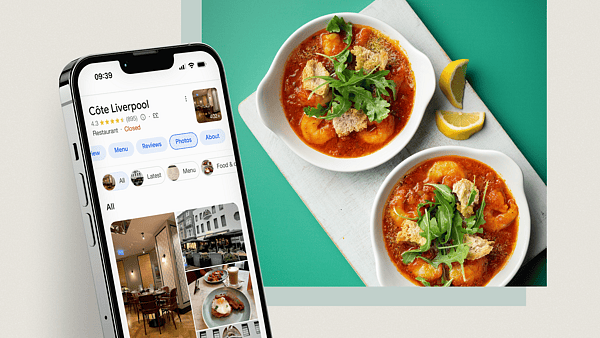
To appear on Google Maps, your business needs a fully verified Google Business Profile. Add your location, opening hours, categories and photos and keep everything accurate and up to date.
Already verified? Improve your visibility by focusing on:
Check out our guide to Google Business Profile for Beginners for practical verification steps and more quick wins! Here how we achieved a 699% ROI for Côte Brasserie in our case study here.
Reviews are still a heavyweight ranking factor in 2026. But they’re not just for visibility; they build real-world trust too. A single location with poor, unanswered reviews can hurt the whole brand.
So:
Need help? Try these review response templates:
As we mentioned, each of your locations needs its own fully verified Google Business Profile and Bing Places listing. Keep categories, hours and descriptions accurate and relevant. If there’s a field to complete, complete it. Use bulk tools to keep things manageable.
To optimise listings:
Tools to manage listings at scale:
Schema markup helps Google ‘read’ your business better. Use LocalBusiness schema (JSON-LD format is your friend) to serve up all the details search engines need:
Here’s a quick example:
{
“@context”: “https://schema.org”,
“@type”: “LocalBusiness”,
“name”: “Joe’s Deli - Leeds Central”,
“address”: {
“@type”: “PostalAddress”,
“streetAddress”: “123 High Street”,
“addressLocality”: “Leeds”,
“postalCode”: “LS1 1AA”,
“addressCountry”: “GB”
},
“telephone”: “+44 113 555 1234”,
“openingHours”: [“Mo-Fr 08:00-17:00”, “Sa 09:00-14:00”],
“geo”: {
“@type”: “GeoCoordinates”,
“latitude”: 53.8008,
“longitude”: -1.5491
}
}
Want bonus points? Add Speakable schema for voice search support.
Each location should have its own landing page on your site - not just a list on a directory. Keep it simple, clear and local:
These pages help each branch rank in its own right and give customers what they need quickly.
It’s not just about listings. Mentions of your business across local directories, blogs, and partner sites help reinforce your legitimacy. Prioritise getting listed on:
Citations with consistent NAP across these sites boost your authority. And local backlinks? Even better.
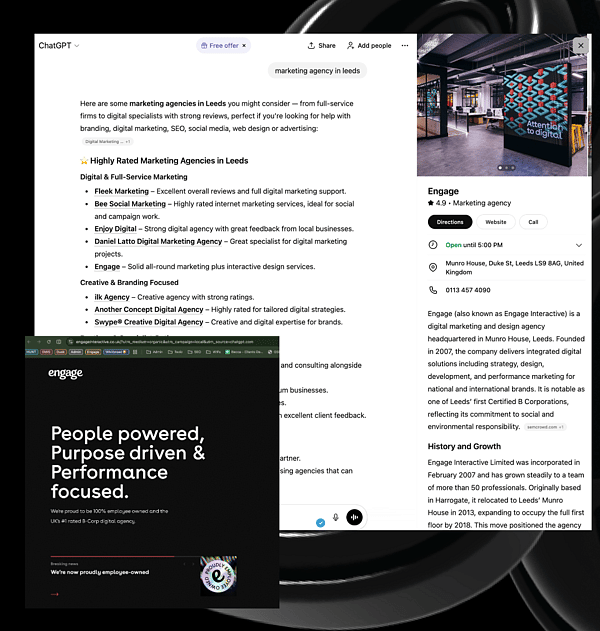
Yep, ChatGPT is in the local SEO game now. From late 2025, OpenAI started rolling out Local Knowledge Panels. Think of them like Google’s version, but baked into AI chat.
They can show:
To show up here, your data across GBP, Bing and your own site needs to be squeaky clean.
Want to stand out?
Other emerging platforms to watch:
Make sure your URLs make sense and are relevant to your business. Something like:
Clean, readable URLs help both users and search engines understand the location and purpose.
Pro tip: This can help your website rank for both location-based and general terms. One of our clients saw a +1300 keyword lift by shifting from generic URLs to location-relevant ones like /motorway-services/m1-southbound.
Multi-location local SEO is a juggling act. But with the right balance of consistency and local flavour, it scales beautifully.
Get the basics right: listings, reviews, schema, and landing pages, and you’ll be in a great spot. Embrace the new (hello, ChatGPT panels), and you’ll stay ahead.
Audit what you’ve got, fix what’s broken, and build for the future. Because local search isn’t just search anymore, it’s discovery, trust, and visibility, all rolled into one.
Want more tips? Get in touch to learn how our team can help you win at local SEO!
Start by creating a unique landing page for each location, then make sure every Google Business Profile, Bing Places listing and citation has accurate Name, Address and Phone Number details. Add local content, reviews, maps, opening hours, images and structured data to help each location rank in its own area.
Yes, each location should usually have its own landing page. A dedicated page gives search engines and customers clear information about that specific branch, including address, services, opening hours, nearby landmarks and contact details. One generic locations page rarely does enough heavy lifting.
Each location should have its own verified Google Business Profile with the right categories, opening hours, photos, services, contact details and website link. Keep the information consistent across every platform and make sure local teams do not go rogue with random edits. It happens.
The biggest mistakes are duplicate location pages, inconsistent listings, missing reviews, weak local content, outdated opening hours and no central process for managing updates. Multi-location SEO does not usually fall apart because of one big dramatic issue. It is normally death by tiny admin problems. Very glamorous.
6th October 2026
14th September 2026

9th September 2026

9th September 2026