FMCG has always been defined by scale, speed and shelf presence. What's changed is how much of the purchase decision is shaped before a shopper gets anywhere near the aisle.
Add shifting regulation into the mix, from HFSS restrictions to changing retail promotion rules, and the pressure on FMCG brands to build demand before the point of purchase gets even more intense.
The brands winning right now aren't necessarily the ones spending the most. They're the ones that understand a fundamental shift: digital is no longer just a visibility channel. It's where preference is built, recall is created and the split-second decisions that happen at the point of purchase are influenced, sometimes days or weeks before anyone picks up a product.
Too many FMCG brands still treat digital as a bolt-on. The opportunity – and it’s a significant one – is in creating experiences people actually want to engage with, and that stay with them when it counts.
What drives performance in FMCG
Three things make FMCG fundamentally different from most sectors, and they shape everything else.
Decisions are made in seconds. Shoppers aren't researching extensively. They're choosing based on familiarity, visibility and what comes to mind first. The mental availability a brand has built through digital activity – long before that moment – is often the deciding factor.
Retail environments control the final conversion. Even the most effective digital campaign still depends on availability, placement and presence at the point of sale. Digital and retail aren't separate strategies but two parts of the same one. That’s become even more important as HFSS rules reshape how certain food and drink products can be promoted, placed and supported across retail and media environments.
Loyalty is fragile. Without strong recall or recent engagement, consumers switch quickly on price, promotion or convenience. The brands with the highest retention are visible, yes, but they're also the most present in people's lives between purchases.
This is why passive digital strategies struggle in FMCG. Attention is easy to buy. Recall has to be earned.
media-single-image
rich-text
Seen in practice: squeezing out some serious results for Frubes
Awareness was never Frubes’ problem. As one of the most recognisable names in the kids’ snack aisle, the brand already had visibility. What it needed was something more: genuine engagement that built familiarity, captured first-party data and gave families a reason to keep coming back.
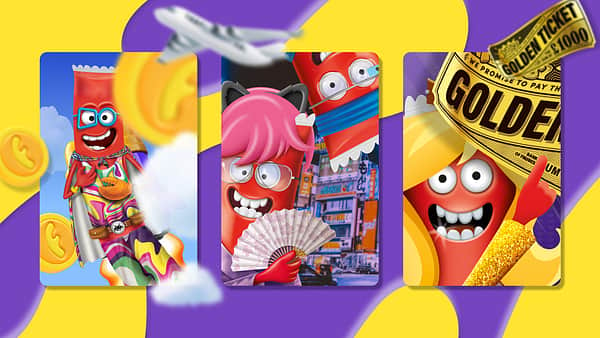
Across Frubes, we used three different activation approaches to build memory before the shelf: social momentum, promotional excitement and interactive participation.
Golden Ticket: launched around back-to-school season, using reactive short-form video, trending TikTok formats and user-generated content, with VOD and overlay placements on ITV and Channel 4 extending the campaign to over 4.4 million impressions from VOD alone.
Frubes Japan: paired an on-pack promotion with bold, Tokyo-inspired creative, Disney+ distribution and parent and lifestyle influencers, delivering over 2.5 million Meta impressions and engagements.
Frubes Flight Academy: linked physical packaging to digital gameplay through a gamified character-collecting experience. Families scanned QR codes on limited-edition packs to unlock one of 24 playable characters, helping drive over 1.4 million game plays within four weeks.
Across all three campaigns, the same principle holds: give people something worth engaging with and they'll do it more than once. It’s a simple idea, but powerful in practice.
Growth in FMCG rarely comes from a single channel. It comes from different elements influencing behaviour across the full path to purchase.
Social-first thinking is where most of it starts. Social isn't a distribution channel for repurposed assets, it's where FMCG brands build relevance in real time. The campaigns that perform best are designed for social from the outset: built for sharing, participation and repeat exposure.
Our Robinsons x Wimbledon work is a good example. We developed Tappy Tennis, a quick-fire game pitting players' forehands against a progressively faster tennis ball launcher, with bonus rounds and instant wins as the campaign's interactive centrepiece. Over 518,000 total plays across 88,000 players, and a mechanic that turned a brand association people already loved into something they actively wanted to take part in.
media-single-image
rich-text
Activations that create participation represent the biggest single shift in FMCG marketing. The move from passive content to active experiences – games, competitions, quizzes, reward-led mechanics – changes the nature of engagement entirely. Interaction creates memory. Memory influences purchase. And well-designed mechanics can turn a single engaged user into a repeat one, which is where the real value accumulates.
First-party data is perhaps the most underleveraged opportunity in the category. FMCG brands have historically had limited direct relationships with their end consumers. This is a structural gap that activations are uniquely positioned to close. Every participation is an opportunity to capture an email, a behavioural signal, an engagement pattern. Over time, that becomes a significant competitive advantage.
Retail media and cultural relevance round out the picture. Retail media works best when it reinforces something people have already encountered elsewhere. And campaigns built around genuine cultural or seasonal moments consistently outperform always-on activity, because they give people a reason to engage now, not later.
How the channels connect
No single channel carries the full load in FMCG and each one plays a distinct role:
Social: builds familiarity and relevance early in the journey.
Activations: turn that familiarity into interaction and generate first-party data in the process.
SEO: ensures the brand is findable when interest converts to search intent.
Paid media and retail media: influence decisions closer to purchase.
CRM: keeps engaged audiences warm and coming back.
Digital PR: creates the cultural moments that give everything else a reason to exist.
When it goes wrong, the signs are familiar. Reach without real interaction. Good ideas that never get the scale they need. Campaigns that create demand but don't connect to what's happening at the shelf. Data collected and never used. None of these are channel problems. They're strategic ones, and they need strategic thinking to fix them.
Building a strategy that actually works
The most effective FMCG digital strategies are built around behaviour first and channels second. The right starting question isn't "which channels should we use?", it's "what will people actually engage with, and how does that connect to purchase?"
A well-designed activation answers that question. It creates a central experience that channels support – rather than a set of disconnected activities that happen to share a brief. Campaigns that give users a reason to return, through progression, rewards or new content, build the kind of familiarity that influences decisions at the shelf.
Connecting digital activity to real-world outcomes is the final piece, timing campaigns around retail promotions, using incentives that drive measurable behaviour, building always-on data capture that improves targeting over time. Every interaction is a signal. The brands that actually listen to those signals are the ones that pull ahead from the pack.
Where FMCG brands typically lose performance
Despite strong budgets and broad distribution, the same issues tend to limit growth, and most come down to a disconnect between digital activity and how the category actually works:
Campaigns that prioritise reach over interaction, generating impressions without building recall
Social content that gives users nothing to do, creating no meaningful engagement data
Lack of integration between digital and in-store activity, so demand is created in one place and lost in another
One-off campaigns with no follow-up strategy, missing the retention value of keeping audiences warm
Treating HFSS and other category restrictions as a final-stage compliance check, rather than something that shapes the channel mix, creative approach and retail plan from the start
The fix isn't more spend or more channels. It's more deliberate thinking about what the campaign is actually supposed to do, and how digital and retail work together to make it happen.
Ready to create campaigns that people actually engage with?
We work with FMCG brands to build digital strategies and activations that drive recall, capture data and connect directly to real-world purchase behaviour. If you'd like to talk through what that could look like for your brand,we'd love to hear from you.
Frequently asked questions
What drives performance in FMCG?
Three things make FMCG fundamentally different from most sectors, and they shape everything else.
Decisions are made in seconds. Shoppers aren't researching extensively. They're choosing based on familiarity, visibility and what comes to mind first. The mental availability a brand has built through digital activity – long before that moment – is often the deciding factor.
What is FMCG marketing?
FMCG marketing promotes fast-moving consumer goods through strategies designed to drive awareness, recall and purchase in high-frequency, low-consideration buying environments. The goal is less about persuading people to buy and more about being the brand that comes to mind first when they're ready to.
What is an activation in FMCG marketing?
An activation is an interactive campaign or experience – a game, competition, challenge or reward mechanic – designed to give users something to actively participate in rather than passively consume. In FMCG, activations create the kind of memorable engagement that influences quick purchase decisions and generate first-party data in the process.
What matters most in an FMCG strategy?
The ability to create memorable, engaging campaigns that influence quick purchase decisions and to connect that digital activity directly to retail outcomes.
Why is social media important for FMCG brands?
Because it's where mental availability is built between purchases, exactly when the familiarity that drives shelf decisions is formed.
How does HFSS affect FMCG digital marketing?
HFSS rules affect how some food and drink products can be promoted, placed and advertised, which means brands need to plan creative, media and retail activity more carefully from the start.
What are the most common mistakes in FMCG digital marketing?
Over-reliance on passive content, campaigns without any interactive element, failure to use first-party data, and activity that doesn't connect to retail reality. The common root: treating digital as a separate discipline rather than an integrated part of how the category works.