Retail and e-commerce are among the most competitive environments in digital marketing. Acquisition costs are rising. Margins are under pressure. And platforms like Amazon continue to reshape how demand is captured and converted.
The instinctive response is to do more: more paid media, more channels. It’s understandable.
It’s also, in our experience, rarely the right one. Performance doesn't improve through more activity. It improves when marketing is properly aligned with commercial reality. This guide explains what that looks like in practice.
What drives e-commerce performance
Before diving into channels and tactics, it's worth being clear about what performance in e-commerce actually depends on, because it's rarely what brands assume.
Strong category-level visibility is where most organic revenue growth begins. Product pages that build confidence quickly determine whether that traffic converts. Paid media, used to scale what already works rather than compensate for what doesn't, drives efficient growth without eroding margin.
Alignment between marketing and commercial factors - pricing, stock levels, feed quality – determines whether campaigns deliver sustainable results. And a joined-up approach across SEO, paid, social and retention is what separates brands that grow consistently from those that plateau.
None of this is complicated in isolation. Getting all of them working together? That’s the interesting part.
Seen in practice: +350% organic revenue growth for MUJI
When MUJI launched new subdomains across key European markets, it needed to build organic visibility from a weaker starting point, as the authority of its established domain wouldn’t automatically transfer to the new subdomains.
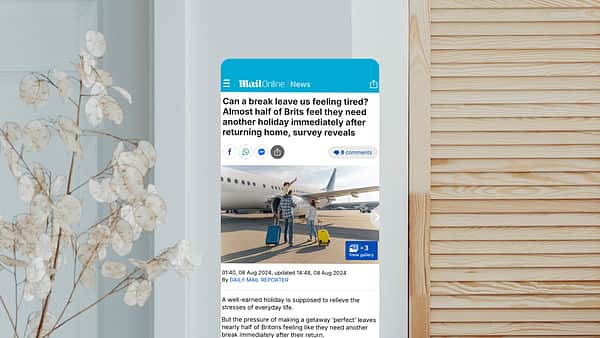
We combined technical SEO improvements with optimised multilingual landing and product content, supported by a digital PR campaign built around original research into holiday sleeping habits. This gave MUJI a genuinely useful and newsworthy story to tell, while strengthening visibility across its sleep, travel and relaxation ranges.
The campaign secured coverage in more than 100 publications across the UK France, with a reach of over 561 million people, and – alongside the wider SEO strategy – contributed to a 350% year-on-year increase in organic revenue.
The reality of retail and e-commerce today
Four shifts are making the old playbook harder to sustain.
Paid media costs are rising. Year-on-year CPC increases in the 10-25% range are common across the retail accounts we manage. As competition intensifies, brands spend more just to hold their ground, and when product feeds, pricing or landing pages aren't strong enough to support that spend, the result is diminishing returns. More spend doesn't fix weak foundations. It merely makes them more expensive to maintain.
Organic search is harder to win – but more valuable. The same structural issues come up in almost every e-commerce SEO audit: category pages misaligned to search intent, over-reliance on product pages for visibility and internal linking that doesn't prioritise commercial pages. Most of the time, the constraint isn't competition but architecture.
Search results have changed. Shopping feeds, product grids and AI-generated summaries have reduced the share of clicks available to traditional organic listings. Pages need to earn attention quickly, build confidence immediately and convert efficiently when they do get the click.
Discovery has fragmented. Users increasingly find products through social and return later via branded or direct search to complete the purchase. This means channels that create demand are routinely undervalued in favour of those that capture it. Attribution models have a lot to answer for.
Conversion is often the real constraint
One of the most common issues across e-commerce isn't traffic. It's what happens after the click.
Product pages that rely on manufacturer copy, carry limited detail or create friction on mobile that quietly undermines the effectiveness of every channel. Traffic arrives and leaves without converting, the problem gets diagnosed as a visibility issue and more spend gets applied. The cycle repeats. It’s one of the more frustrating patterns we see, because the fix is usually closer than people think.
With AI-generated content now commonplace across the web, generic product descriptions carry less weight than ever. Differentiation and genuine product detail are becoming increasingly important, both for search engines and for the users who arrive from them.
The three core drivers of e-commerce performance
Across the brands we work with, performance comes down to three things working in sequence.
Visibility: Being present where high-intent demand exists, particularly through well-structured category pages and targeted paid search. In audits, this is most often limited by site structure or intent misalignment rather than a lack of effort or investment.
Confidence: Giving users a compelling reason to choose your product through strong product pages, reviews, clear messaging and UX that doesn't create doubt. Product pages are the most frequently underinvested part of the e-commerce journey, and the one with the most direct impact on conversion.
Conversion: Removing friction and guiding users clearly to purchase. Drop-off happens through unclear navigation, poor mobile experience or unnecessary steps in the buying journey. Small improvements here tend to have a disproportionate impact on overall revenue.
It sounds straightforward. And it is, once you know where the gap is. The most common pattern we see is strong performance at the top of this sequence, and a failure somewhere in the middle. High traffic, modest revenue and a paid media budget working harder than it should to compensate.
How each channel contributes
Every channel plays a distinct role, and understanding those roles is what prevents budget from being misallocated.
- SEO captures high-intent demand efficiently over time. It’s strongest when category structure and domain authority are aligned, and where some of the most durable revenue growth comes from.
- Paid media scales what already works, but amplifies inefficiency just as quickly when conversion or pricing is weak.
- Social introduces products to new audiences and creates demand that converts later through search or direct. Frequently undervalued because attribution models don't capture that delayed path well.
- Digital PR builds the authority that allows category pages to compete for high-value terms. Without it, organic performance in competitive markets tends to plateau.
- CRM and retention is where margin is actually made in most retail accounts, yet it remains the most underinvested channel across the brands we work with.
The failure modes are predictable: paid media compensating for weak conversion; SEO underperforming due to poor structure rather than lack of effort; social undervalued because attribution doesn't tell the full story; CRM deprioritised in favour of faster-returning channels. These are alignment problems, not channel problems.
Where to focus first
Prioritisation should follow the constraint, not the channel.
- High traffic, modest revenue? Start with product pages and UX.
- Paid media not scaling efficiently? Look at pricing, landing pages and campaign structure.
- Growth slowing despite solid fundamentals? Invest in SEO.
- Margins under pressure? Focus on retention.
It’s not always a comfortable conversation, but it’s usually a short one – and it tends to point somewhere useful.
Seen in practice: +449% project ROI for DUSK.com
Our work with DUSK is a great example of what happens when you start with the commercial constraint rather than defaulting to more activity. Organic search had significant growth potential, but unlocking it meant looking beyond content production to where technical performance, site structure and seasonal demand were limiting results.
We brought technical SEO, collection architecture, content, attribution and revenue into one commercially focused strategy. Technical issues were prioritised according to likely impact, while collection pages were expanded around the ways customers actually search - by colour, style, product type and buying intent. We also created targeted landing pages around key trading periods such as Black Friday, helping DUSK capture more specific seasonal demand.
The work generated £10.6 million in organic revenue, delivered a 449% project ROI and increased engaged sessions by 42%. That makes DUSK a useful proof point for the approach outlined here: understanding the commercial context first, then using the right activity to support it.
What to look for in an e-commerce agency
The best e-commerce agencies don't just run channels, they understand how marketing connects to the commercial side of the business. That means a genuine understanding of margins, pricing and product mix; thinking across SEO, paid, social and digital PR as a connected system - experience with platforms, product feeds and large catalogues - and a clear focus on conversion and retention.
The role of an e-commerce agency isn't simply to drive impressions. It's to improve efficiency, scalability and long-term growth. And to be honest with you, to recognise where the real constraints sit somewhere else in the business.
Ready to improve e-commerce performance?
We bring SEO, paid media, social and digital PR together into a single connected approach for retail and e-commerce brands – because that's what real performance looks like. If growth is plateauing or acquisition costs are climbing, let's have an honest conversation about what's actually holding things back.